
5 Ways Movement Supports Emotional Regulation
for Kids and Adults
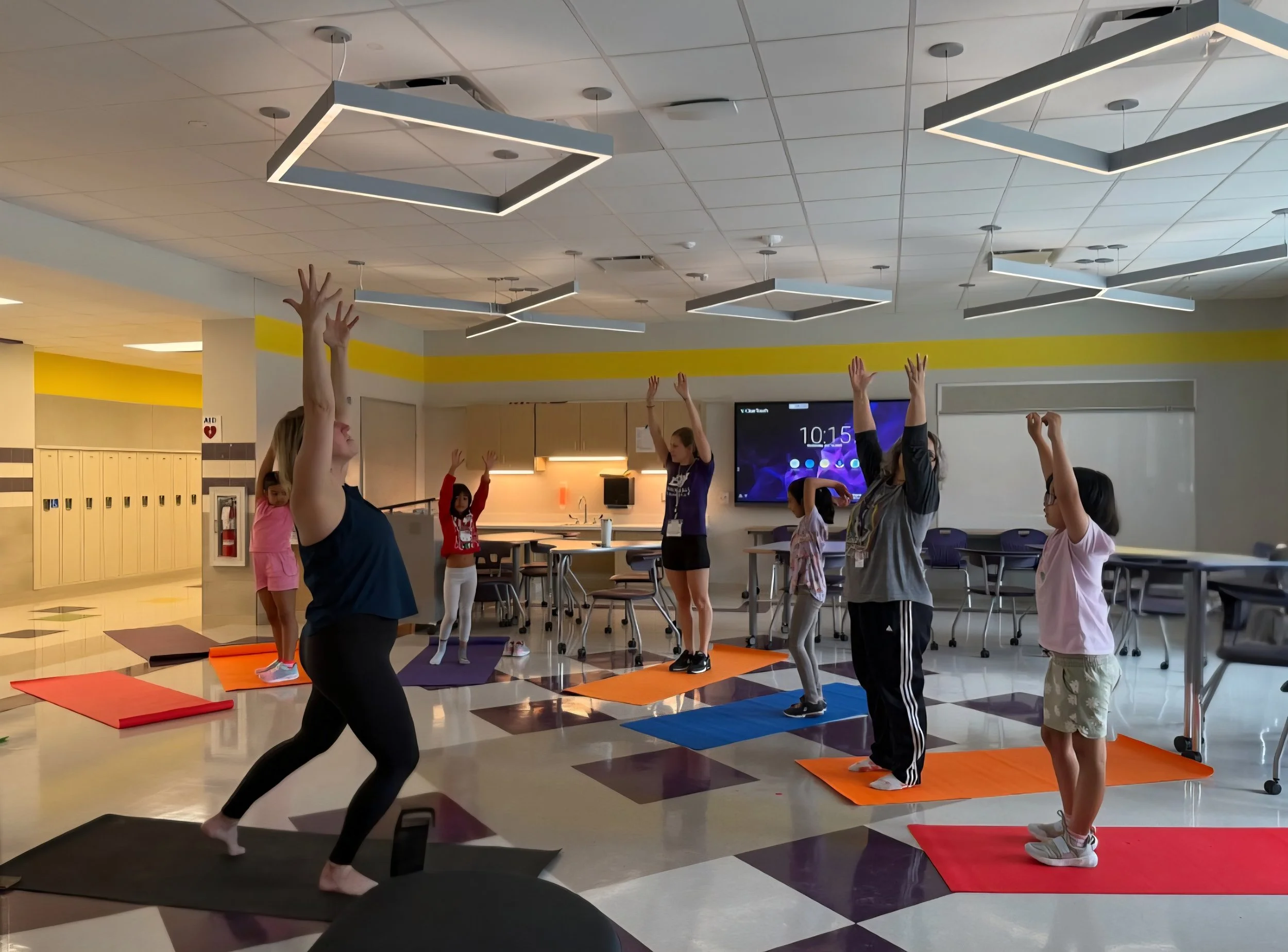
Open Up teacher leads classroom students and teacher through a movement series.
At Open Up, we see emotional regulation not as staying calm, but as building the capacity to notice what’s happening inside us and choose how we respond. Movement is one of the most powerful ways to support that process because it meets us in the body, where emotions live.
Here are five research informed ways movement supports emotional regulation across ages and abilities.
1. Movement creates space between feeling and reaction
Emotional regulation depends on skills like pausing, focusing attention, and shifting out of stuck patterns. Gentle, repeated movement supports these skills by helping the brain slow down and reorganize.
What we see: kids pause more easily and adults respond with more choice.
2. Movement helps the body release stress
Stress shows up physically through tight shoulders, shallow breath, or restlessness. Movement helps the nervous system release that stress, making it easier to settle after hard moments.
What we see: emotions move through more quickly instead of building or lingering.
3. Movement builds awareness of internal cues
Before emotions become overwhelming, the body often sends signals. Movement supports interoception, or our ability to notice breath, tension, energy, and sensation, so we can respond earlier and with care.
What we see: something feels off becomes a signal, not a surprise.
4. Movement supports focus and transitions
When attention is depleted, emotions feel bigger. Short, accessible movement breaks help reset attention and support smoother transitions, especially in classrooms, homes, and busy days.
What we see: fewer power struggles and more readiness to engage.
5. Movement supports flexible coping
Movement does not erase emotions, but it creates the conditions for reflection, problem-solving, and perspective. From that place, regulation becomes possible.
What we see: more options, more resilience, and more self-trust.
How this shows up in Open Schools
In our Open Schools Program, we integrate movement and mindfulness into the school day to support students and educators in real time. Rather than pulling students out or adding more to already full schedules, we offer short, accessible practices that help students regulate their bodies, build emotional awareness, and return to learning with greater focus and confidence.
Educators often share that these moments of movement support smoother transitions, fewer disruptions, and a more grounded classroom environment.
Our takeaway
Movement is not about performance or intensity. It is about access, choice, and connection. When movement is inclusive and responsive, it becomes a tool for emotional regulation, belonging, and wellbeing for kids and adults alike.
At Open Up, we design movement experiences that support nervous system regulation, self awareness, and community because wellbeing should be accessible to everyone.