
Accessibility Is a Practice, Not a Policy
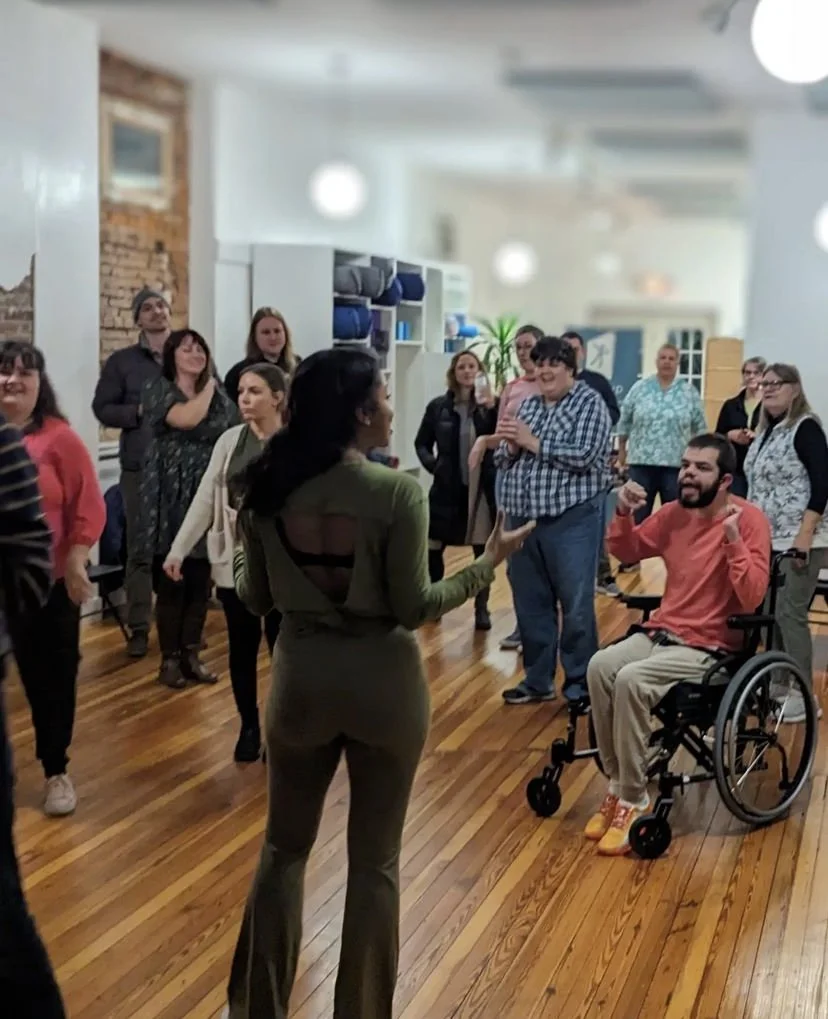
Dance Party Facilitator, Chandler stands facing a crown of participants
Accessibility is often treated like a checkbox—a statement, a policy, a one-time effort.
But accessibility isn’t something you declare.
It’s something you do.
Over and over again.
There Is No Done
It’s easy to believe accessibility can be completed: add a ramp, include captions, offer a scholarship.
But people’s needs aren’t static. What works for one person may exclude another.
Accessibility isn’t a finish line. It’s an ongoing relationship between people, spaces, and systems.
Practice Over Perfection
When accessibility is a practice, it looks like:
Asking, “What might we be missing?”
Staying flexible instead of rigid
Adjusting without defensiveness
Treating feedback as a gift
It’s not about getting it perfect. It’s about staying responsive.
From Compliance to Care
Policies focus on meeting requirements.
Practice is rooted in care.
Care asks:
Who feels welcome here—and who doesn’t?
Who is working harder just to participate?
What barriers can’t we see?
Accessibility begins where compliance ends.
Small Shifts Matter
Accessibility often lives in simple choices:
Offering options
Using clear language
Building in flexibility
Asking instead of assuming
These moments send a clear message: You belong here.
A Living Commitment
Accessibility is not a one-time fix. It’s an ongoing commitment to listen, learn, and adapt.
It means being willing to say, “We can do better,” and then actually doing it.
Because accessibility isn’t about policies—it’s about people.
And people are always worth the practice.